


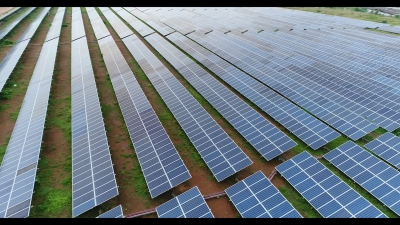
India is advised to bolster its renewable energy ecosystem and expand clean energy deployment, as per a senior government official. Santosh Sarangi, Secretary of the Ministry of New and Renewable Energy, highlighted India’s remarkable progress in renewable energy over the past decade, with significant advancements in global rankings. The official emphasized a national objective focusing on accelerating renewable energy deployment, achieving self-reliance in manufacturing, and promoting higher citizen adoption.
Underlining the strategic approach involving policy initiatives and trade mechanisms, India has increased its solar capacity from 2.63 GW in 2014 to over 134 GW presently. This transition aims not only at capacity expansion but also at establishing a resilient, self-sufficient ecosystem that can serve as a model for global energy transformations. Dr. Vibha Dhawan, Director General of TERI, mentioned a comprehensive study indicating an extensive solar potential exceeding 10,800 GW across various deployment methods.
The study shifts the focus towards capturing value domestically through manufacturing, technology, skills, and robust supply chains, while ensuring affordable electricity for households and industries. Despite significant progress in module manufacturing, India faces vulnerabilities due to heavy reliance on imports for polysilicon and wafers, posing risks to future solar deployment without timely establishment of upstream capacity. The report stresses the need for incentives in domestic equipment manufacturing and accelerated R&D to mitigate supply chain disruptions and geopolitical risks.
Access to affordable finance is crucial for large-scale upstream investments, with recommendations including sovereign “Green-PV” bonds, co-equity participation by national institutions, and concessional debt from development finance bodies. The report also suggests the development of Solar-Semicon Technology Parks, pilot fabs for advanced technologies, and a dedicated PV-Semicon Skill Council to enhance innovation pipelines and workforce readiness, with a focus on incentivizing skilling outcomes and promoting women’s participation in manufacturing.
