


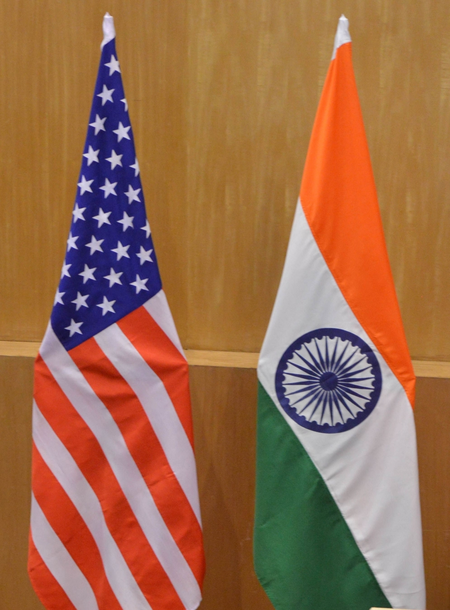
The recently concluded India–US trade deal is viewed as a significant milestone in India’s growth journey. Dr. A. Sivathanu Pillai, former BrahMos Aerospace chief, highlighted India’s progress towards becoming a major defense and economic power. He credited this advancement to indigenous hypersonic technology and the rapid expansion of the country’s space sector.
Dr. Pillai mentioned India’s shift towards advanced missile systems beyond conventional ones, focusing on developing an upgraded version of BrahMos known as “Super BrahMos.” He noted a growing international interest in acquiring BrahMos missiles, particularly after their success in “Operation Sindhura.”
On the economic front, Dr. Pillai emphasized India’s position as the world’s fourth-largest economy, poised to potentially surpass Germany to claim the third spot. Discussing the Gaganyaan mission, he outlined plans for unmanned missions, including one with a humanoid robot, to test safety and re-entry systems before sending astronauts into space.
Dr. Pillai also highlighted the burgeoning private space ecosystem in India, with approximately 400 active space startups like Agnikul and Skyroot. These startups, he explained, collaborate with ISRO to meet the increasing demand for satellites and launch vehicles, serving as partners rather than competitors.
Reflecting on his association with former President Dr. APJ Abdul Kalam, Dr. Pillai expressed confidence in India’s progress towards becoming a developed nation as envisioned by Kalam. Additionally, Chandrajit Banerjee, Director General of the Confederation of Indian Industry (CII), welcomed the India–US trade agreement, foreseeing benefits for people, businesses, and job creation in both nations.
Banerjee commended Prime Minister Narendra Modi’s economic policies, considering India’s policy framework a global benchmark. He also highlighted the positive impact of the US President’s confidence in India on strengthening bilateral ties.
