


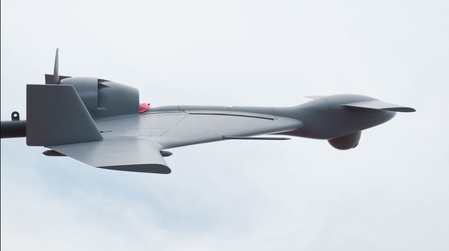
The Indian Air Force has commenced a project to create homegrown long-range Kamikaze drones in collaboration with Indian industry. This initiative involves the selection of Indian companies for One-Way Attack Unmanned Aerial Systems (OWA-UAS), as confirmed by a Defence Ministry official. The 5 Base Repair Depot (BRD) at Sulur near Coimbatore in Tamil Nadu will oversee the Kamikaze drone project, serving as the central agency for this crucial endeavor.
The Kamikaze drones, also referred to as loitering munitions or suicide drones, are unmanned aerial vehicles designed for one-way missions. These drones fly to a specified target area, identify adversaries, and self-detonate upon impact. The Defence Ministry has decided that the Indian Air Force will retain the Intellectual Property Rights (IPR) of the drone platform, which is set to be entirely conceived, developed, and manufactured within India with the assistance of domestic companies and start-ups.
Under the project’s framework, there will be provisions for swift upgrades, modifications, and customization tailored to operational requirements, as highlighted in the official statement. The specifications outlined by the Indian Air Force indicate that the long-range Kamikaze drones will be operational up to 16,000 feet, functioning seamlessly in both day and night conditions.
During a prior National Defence Industries Conclave, Defence Minister Rajnath Singh emphasized the necessity for India to strive towards becoming a global hub for indigenous drone manufacturing in the coming years. This strategic move aims to bolster strategic autonomy, enhance defense readiness, and foster self-reliance in light of prevailing geopolitical uncertainties. Singh underscored the increasing significance of drones and counter-drone technologies in future warfare, citing ongoing global conflicts as evidence.
Singh stressed the importance of achieving self-sufficiency not only at the product level but also at the component level in drone manufacturing. He emphasized the need for comprehensive domestic production, from the drone’s molds to its software, engines, and batteries, to reduce reliance on imports. Singh highlighted the pivotal role played by large industries, MSMEs, start-ups, and innovators in the defense industrial ecosystem, underscoring the government’s role in providing a conducive policy environment to meet the nation’s defense needs.
