


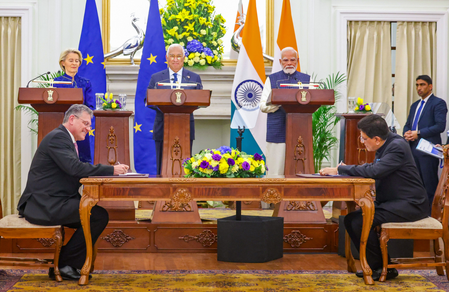
The Confederation of Indian Industry (CII) highlighted the significant impact of the preferential access obtained for over 99% of Indian exports through the India-EU trade deal. This deal, valued at Rs 6.41 lakh crore ($75 billion), particularly benefits sectors like textiles, leather, marine products, gems, and jewelry. According to Chandrajit Banerjee, Director General of CII, this agreement marks a crucial advancement in India’s global trade relations, strengthening ties between two major economies representing a quarter of the global GDP.
The agreement is expected to enhance India’s competitiveness in the EU market, integrate Indian businesses into global value chains, and attract investments and technology inflows. Key sectors set to gain include textiles, apparel, leather goods, gems, jewelry, engineering products, automobiles, agriculture, IT services, and more. The CII views this development as a step towards inclusive and globally competitive growth, aligning with India’s vision for 2047.
Audi India’s Brand Director, Balbir Singh Dhillon, welcomed the potential of the FTA to deepen economic connections with the EU. He emphasized the positive impact on the automotive sector, fostering innovation, supply chain efficiency, and technology collaboration. Dhillon noted that the final implications on pricing and market dynamics would require careful assessment once the terms are finalized. The FTA is set to lower tariffs on European cars entering India to 10%, opening new avenues for European automakers in one of the world’s largest automotive markets.
