


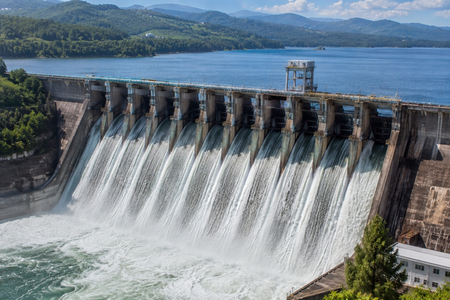
The Indian government announced that initiatives like the Dam Rehabilitation and Improvement Project (DRIP) and the Dam Safety Act, 2021, along with digital tools like DHARMA, are bolstering the real-time monitoring and safety management of Indian dams. This shift in focus from dam expansion to safety and resilience aims to address the aging infrastructure and changing climatic conditions of the nation’s extensive network of large dams. The DRIP, being executed in phases, is aimed at enhancing dam safety and operational efficiency.
The Dam Safety Act, 2021, facilitates surveillance, inspection, operation, and maintenance of specified dams to prevent dam failure-related disasters. It establishes an institutional framework to ensure the safe functioning of dams and related matters. India, ranking third globally in large dams, has 6,628 specified dams, with 6,545 operational and 83 under construction, boasting a combined gross water storage capacity of around 330 billion cubic meters.
Notably, a significant portion of India’s dams, about 26%, are over 50 years old, with 291 dams surpassing the century mark. Additionally, 42% of dams fall within the 25–50 years age bracket. The Kallanai (Grand Anicut) in Tamil Nadu, India’s oldest dam, has been operational for nearly 2,000 years, underscoring enduring engineering and maintenance practices. The aging infrastructure, sedimentation, and evolving hydrological patterns necessitate systematic rehabilitation and safety management efforts.
A comprehensive analysis of 439 reservoirs in India, based on Central Water Commission data, revealed an average 19% loss in gross storage capacity, with reservoirs averaging 42 years in age.
