


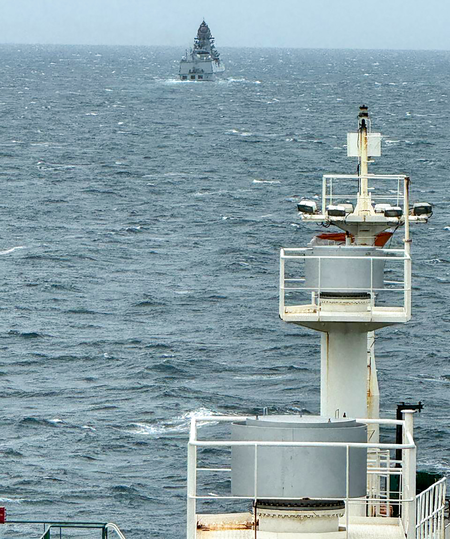
In the Strait of Hormuz, where global energy flows face disruption, the Indian Navy is working diligently to maintain the country’s energy supply. Amid Iran’s restrictions affecting international energy markets due to the West Asia conflict, India has secured permission from Tehran to allow its ships to pass through the Strait of Hormuz, ensuring the movement of its shipments.
The Indian Navy’s operation, named ‘Operation Urja Suraksha,’ involves positioning over five advanced warships in the strategic maritime chokepoint of the Strait of Hormuz. Each ship preparing to exit the Persian Gulf receives individual guidance from the Navy, with precise instructions on routes and procedures for safe passage.
Naval personnel are not only accompanying the tankers but are actively guiding them through the sensitive maritime passage, emphasizing cautious and deliberate navigation due to underlying risks. The Navy’s destroyers and frigates take over once the vessels clear the Strait, escorting them through the initial part of their journey, ensuring a layered security approach.
Supported by an increased naval presence in the Gulf of Oman, the Indian Navy’s escort operations are backed by adequate warships and logistical resources to maintain uninterrupted passage. The guidance provided by the Navy is crucial in helping Indian-flagged vessels navigate safely through the region, avoiding potential threats and hazards.
The hydrographic work of the Indian Navy plays a vital role in ensuring safe navigation through the region’s waters, with specialized survey vessels creating detailed charts of the ocean floor. These charts, essential for modern shipping, help vessels avoid dangers such as underwater mines allegedly deployed by Iran in the Strait of Hormuz.
The Indian Navy’s expertise in hydrographic mapping extends beyond national waters, assisting friendly nations in surveying their Exclusive Economic Zones and preparing navigation charts. With international acceptance, these charts contribute to safer maritime operations not only in the region but globally, ensuring ships can navigate through critical waterways with confidence.
