


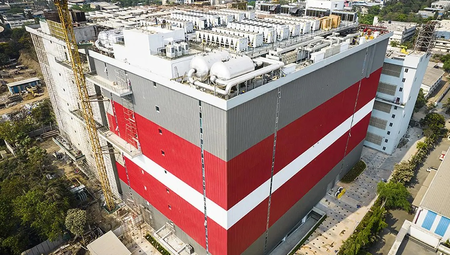
India is expected to witness a significant increase in its data centre capacity, growing from 1.8 GW to around 10.5 GW by the fiscal year 2031. This surge is attributed to the growing demand fueled by the adoption of artificial intelligence and data localization policies, as outlined in a report by investment bank Morgan Stanley. The report suggests that AI workloads alone could contribute approximately 6.8 GW to the projected capacity, driven by the need for low-latency processing and stricter localization regulations.
The investment bank’s report also points out that factors such as geopolitical shifts, regulatory initiatives in India, and the rising demand for enhanced compute intensity are driving a substantial investment cycle in data centers. It forecasts an industrial capital expenditure of about $60 billion associated with the expansion of data center capacity, covering various aspects including land, power systems, cooling infrastructure, and networking equipment.
Moreover, the report emphasizes the necessity for over $20 billion in investments in the power ecosystem to support energy-intensive data center facilities. Operators are increasingly transitioning towards renewable energy sources and storage solutions to meet these demands. Policy measures like data localization requirements, infrastructure recognition for data centers, and fiscal incentives are identified as key drivers accelerating capital formation and attracting global hyperscalers to the Indian market.
The strategic importance of bolstering domestic data storage is highlighted in the report, noting benefits such as enhanced digital sovereignty, reduced dependence on foreign infrastructure, and positioning India as a regional hub for global technology companies. The report anticipates a deepening of foreign investment inflows, further solidifying India’s status as a regional center for cloud services and digital technologies.
Morgan Stanley also identifies challenges hindering the rapid scaling of data centers in India, including the need for reliable and cost-effective power sources and the country’s reliance on imported high-end computing hardware. The report forecasts that a significant portion of incremental capital expenditure in India until 2030 is likely to be allocated towards energy transition, data centers, and defense sectors.
