


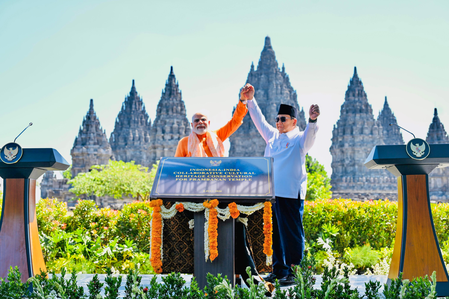
India’s recent diplomatic efforts signify the increasing role of emerging powers in shaping regional dynamics, rather than merely reacting to geopolitical shifts. Prime Minister Narendra Modi’s visit to Indonesia, Australia, and New Zealand highlighted India’s commitment to influencing the strategic and economic landscape of the Indo-Pacific amidst evolving global politics.
The significance of Modi’s tour extends beyond the destinations visited, emphasizing India’s evolving regional strategy and its implications for neighboring countries like Bangladesh. The Indo-Pacific region has emerged as a crucial arena where economic, security, and technological interests intersect, with India aiming to play a pivotal role in setting the agenda.
During the visits, discussions focused on various aspects such as maritime cooperation, defense ties, energy security, and economic partnerships. These engagements underscored India’s ‘Act East’ policy and its vision for a free, open, and rules-based Indo-Pacific, positioning the country as a key player in the region’s development.
The evolving regional landscape prompts Bangladesh to consider broader implications and opportunities arising from India’s strategic initiatives, moving beyond traditional bilateral concerns. Emphasizing maritime cooperation and economic integration, Bangladesh can leverage India’s focus on maritime security and connectivity to enhance industrial collaboration and technological investments, particularly in the Bay of Bengal region.
India’s emphasis on maritime awareness and connectivity aligns with Bangladesh’s blue economy aspirations, offering avenues for enhanced cooperation in disaster response, fisheries management, and trade security in the Bay of Bengal. This shared economic space presents collaborative opportunities that can benefit both countries and contribute to the region’s prosperity.
