


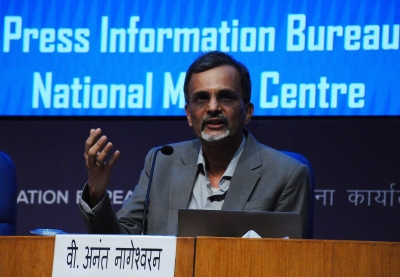
In a recent address at the US-India Economic Forum 2026, Chief Economic Advisor V. Anantha Nageswaran highlighted concerns over the impact of the Iran-US conflict on India’s economy. He emphasized that the surge in crude oil prices and broader commodity pressures could escalate inflation and elevate production costs across various sectors. Nageswaran stressed that the effects extend beyond oil prices to encompass essential commodities crucial for the economy.
India has witnessed a significant increase in the landed cost of crude oil, reaching around $113 per barrel in March, with April levels remaining elevated near $110. Despite market expectations of a correction, prices are anticipated to stay notably higher than the $60–65 range observed in recent years. Nageswaran suggested that a more realistic average price would be around $90, underscoring the sustained economic pressure.
The Chief Economic Advisor pointed out that the soaring energy prices directly impact inflation and production expenses. He emphasized the necessity for India to consider the rising costs not only in oil but also in petrochemicals, fertilizers, and gas, which are vital inputs for agriculture and industry. Nageswaran highlighted the potential macroeconomic consequences of the current situation, especially after a period of low inflation in 2025–26.
The recent upsurge in global commodity prices has already started to manifest in month-on-month and year-on-year increments, raising alarms regarding input costs for businesses and potential consumer price surges. Nageswaran expressed concerns about the lingering uncertainties, particularly regarding the speed at which energy markets can stabilize post-conflict. He emphasized the importance of not only ending the conflict but also restoring normalcy in energy markets for long-term stability.
The risks posed by higher import bills due to increased commodity prices could strain India’s fiscal and external balances, even amidst steady growth. Despite these challenges, Nageswaran noted that India is entering this phase from a position of strength, backed by stable macroeconomic indicators and sustained growth momentum. He highlighted the government’s efforts to maintain moderate inflation through supply-side interventions and enhanced infrastructure monitoring.
Navigating a volatile global landscape marked by geopolitical tensions and supply disruptions presents a challenge for policymakers in balancing inflation containment with growth preservation. India’s heavy reliance on imported energy, particularly vulnerable to global oil shocks, underscores the significance of managing crude oil prices effectively. Over the years, the government has employed various strategies, including tax adjustments and supply management, to mitigate the impact of price fluctuations while bolstering foreign exchange reserves to address external pressures.
