


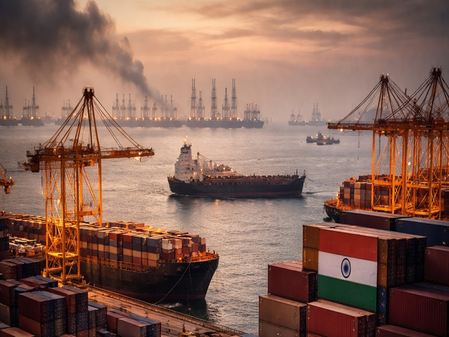
India’s economic stability is under pressure due to the ongoing conflict between the US, Israel, and Iran, disrupting its crucial connections with the Gulf region. The Gulf has been a significant partner for India in terms of trade, energy imports, and remittances, but the current situation poses challenges.
The Middle East accounts for a substantial portion of India’s oil and gas supplies, with about 40% of oil imports and 80% of gas supplies coming from the region. The escalating energy prices are impacting India’s economy, potentially upsetting the balance between growth and inflation.
India’s reliance on the Gulf extends beyond energy, as it is also a key export market. Disruptions in transportation and business operations could disrupt trade flows, especially through commercial hubs like Dubai, which are vital for distributing Indian goods globally.
The repercussions of the conflict could also affect remittances, a significant source of income for India. With around 40% of overseas remittances originating from the Middle East, any decline in earnings of Indian workers in the region could further strain India’s economy and weaken the rupee.
Goldman Sachs has warned that India’s economic growth is facing new challenges due to higher energy costs, reduced exports, and declining remittances. The country’s stock markets have already experienced a decline, reflecting the uncertainties arising from the situation in the Gulf.
The security of India’s energy supply is a critical concern, particularly given its heavy reliance on oil imports. The ongoing tensions in the Strait of Hormuz, a key global oil shipping route near Iran, could have significant implications for India’s energy security and public finances if prolonged disruptions occur.
India’s vulnerability to global oil price fluctuations is evident, with nearly 90% of its crude oil being imported. Analysts caution that prolonged energy shocks could strain India’s economy, necessitating a careful monitoring of the balance of payments and foreign exchange reserves.
The significant Indian diaspora in the Gulf, comprising around 10 million individuals, plays a crucial role in sending remittances back home, which amount to nearly $130 billion annually. The potential impact on these remittances adds another layer of concern for India amid the current geopolitical tensions.
