


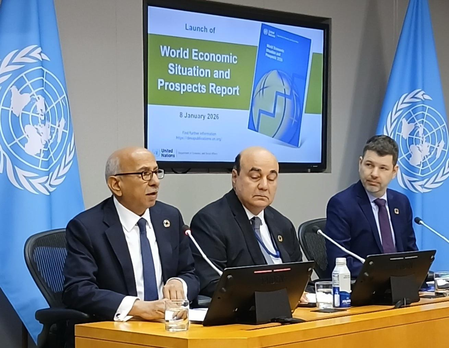
India’s economy is experiencing remarkable growth despite a challenging global environment, as stated by Senior Economist Ingo Pitterle during the release of the UN’s World Economic Situation and Prospects 2026 report. The report confirms India’s position as the world’s fastest-growing major economy, with a 6.6% GDP growth rate. Pitterle highlighted that India’s GDP growth estimate for the previous year was upgraded significantly to 7.4% and the projection for the current year was raised to 6.6%.
The positive growth trajectory in India is attributed to various factors, including robust consumer demand, strong investment particularly in public sectors, and a notable decrease in inflation, partly due to a successful harvest season. These factors have collectively contributed to a dynamic economy in India. The country also benefited from a reduction in interest rates by the central bank, providing a monetary boost to the economy.
The impact of tariffs imposed by US President Donald Trump on India has been mitigated by the country’s diversification of export markets to the EU and the Middle East, according to Shantanu Mukherjee, the director of the Economic Analysis and Policy Division. Despite challenges in merchandise exports due to tariffs, India’s services exports have remained resilient. Additionally, domestic growth drivers have been robust, supported by strong revenue collection.
The UN’s World Economic Situation and Prospects report emphasized the significance of artificial intelligence, presenting both opportunities and challenges. Mukherjee suggested that India could leverage its skilled workforce to capitalize on AI opportunities, particularly in services exports. By developing applications that enhance productivity, India can further harness the potential of AI beyond its current capabilities.
