


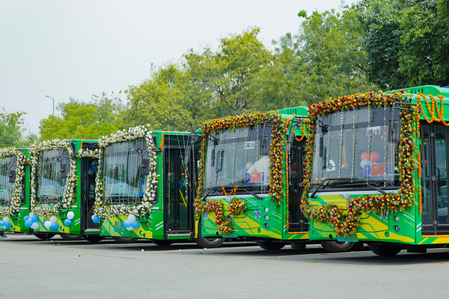
The electric bus penetration in India is projected to increase from 7% to 35–40% of annual bus sales by FY35, with public transport EV penetration expected to surpass 85% during the same period. The country’s bus market, traditionally stable at 35,000–50,000 units per year, is undergoing a transformation with electrification, government procurement programs, and infrastructure investments reshaping its growth trajectory.
Buses represent about 57% of passenger-kilometers traveled in India, making electrification crucial for the nation’s clean mobility and decarbonization goals, as per a report by KPMG in India. The transition to electric buses in India is evolving from a policy-driven initiative to a structural transformation opportunity for the broader mobility ecosystem, driven by government procurement programs, cost efficiencies, and infrastructure investments.
Rohan Rao, Partner at KPMG India, highlighted the shift towards establishing a scalable ecosystem that integrates local manufacturing, innovative financing, expanded charging infrastructure, and operational efficiency to sustain long-term growth in public and private transport sectors. The report suggests that India’s bus industry is undergoing a significant structural transformation fueled by increasing urbanization, mobility demands, sustainability commitments, and clean mobility initiatives.
The e-bus ecosystem in India is entering a crucial phase where scale, localization, and execution capabilities will be key differentiators. While public transport agencies lead the adoption, the growth is expected to expand to private intercity mobility, airport transport, platform-based mobility solutions, and corporate fleets, according to Raghavan Viswanathan, Partner at KPMG in India.
