


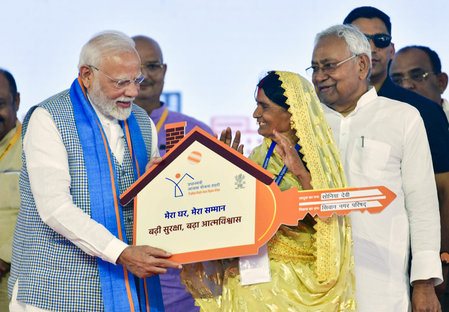
India’s housing schemes, part of the Pradhan Mantri Awas Yojana, are being hailed as a model for inclusion, gender justice, and empowerment in the Global South. These initiatives focus on providing shelter while promoting equality and self-respect for the economically weaker sections. Notably, women-led ownership is a key aspect of major housing schemes, shifting the narrative from women as dependents to recognizing them as rights holders and asset owners.
The Pradhan Mantri Awas Yojana, both in rural and urban settings, along with the Credit Linked Subsidy Scheme, demonstrate how housing policies are being leveraged to foster inclusion, gender equality, and empowerment for the economically disadvantaged. In rural areas, the scheme emphasizes the link between a pucca house and dignity for the rural poor, particularly highlighting the importance of women’s involvement in ownership details.
In rural India, the Pradhan Mantri Awas Yojana Gramin emphasizes the connection between a pucca house and dignity for the rural poor. The scheme mandates the inclusion of women members in sanction and ownership details, aiming for a significant increase in women’s ownership of houses. This gender-focused approach not only enhances women’s status within the family but also provides them with tangible assets for financial leverage and social standing.
The housing initiatives extend beyond mere shelter provision by integrating with sanitation, water supply, electricity, LPG, and solar power schemes in rural areas. This holistic approach ensures that beneficiaries receive not just a house but a comprehensive living environment that supports their health, privacy, and security, especially benefiting women. In urban settings, the Pradhan Mantri Awas Yojana Urban and its upgraded version continue the inclusive housing approach for slum dwellers, low-income workers, and the middle class.
