


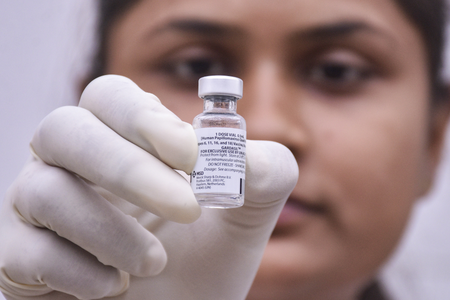
India’s immunisation journey has been marked by significant achievements, starting from the eradication of smallpox in 1977 to the elimination of polio and neonatal tetanus. With the administration of 200 crore COVID-19 vaccine doses and the current pursuit of Measles-Rubella elimination, India’s progress in immunisation is well-documented.
The country has successfully eradicated smallpox, polio, and maternal and neonatal tetanus through vaccination efforts. India’s Universal Immunisation Programme (UIP) stands out as one of the world’s largest immunisation initiatives, providing free vaccination to 2.9 crore pregnant women and 2.54 crore newborns annually.
Under the UIP, full immunisation coverage has significantly increased from 62% in 2015 to 98.4% in January 2026. The percentage of zero-dose children in the population has also shown a decline, dropping from 0.11% in 2023 to 0.06% in 2024.
Over the past decade, India has introduced several new vaccines into its immunisation programme, including the Inactivated Polio Vaccine (IPV), Rotavirus Vaccine (RVV), Measles-Rubella (MR) vaccine, and Pneumococcal Conjugate Vaccine (PCV). The recent launch of the Human Papillomavirus (HPV) vaccination campaign aims to protect 14-year-old girls from cervical cancer, with around 1.15 crore girls set to receive the vaccine free of charge at government health facilities.
India’s robust vaccine cold chain infrastructure comprises nearly 30,000 cold chain points, ensuring vaccine integrity from national depots to sub-district health centers. With over 1.06 lakh ice-lined refrigerators and deep freezers, as well as 432 walk-in cooler and walk-in freezers, the storage facilities play a crucial role in maintaining vaccine potency.
