


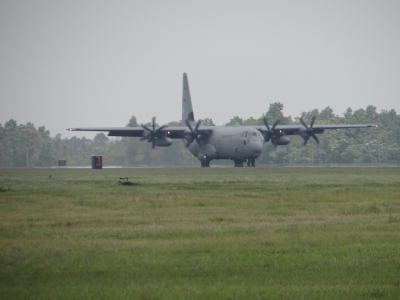
India’s upcoming Maintenance, Repair, and Overhaul (MRO) facility for military transport aircraft in Bengaluru signifies a crucial step in the nation’s defense partnership with the United States. Scheduled for completion by late 2026, the project is a joint effort between Tata Advanced Systems of India and Lockheed Martin from the US. The initiative, highlighted in the military magazine ‘Indo-Pacific Defense FORUM,’ aims to strengthen India’s aerospace industry, enhance regional sustainment capabilities, and align with New Delhi’s “Make in India and Self-Reliant India” campaigns.
The MRO center, primarily intended to support the Indian Air Force’s fleet of 12 C-130J Super Hercules aircraft, is expected to cater to regional operators as well. This development positions India as a key hub for heavy-airlift support in the Indo-Pacific region. The facility’s strategic significance lies in its comprehensive services, encompassing depot-level sustainment, structural enhancements, avionics upgrades, and thorough inspections crucial for ensuring aircraft operational longevity.
According to the report, the establishment of depot-level maintenance capabilities within India enables the Indian Air Force (IAF) to streamline project timelines and costs while fostering local technical proficiency. Lockheed Martin’s emphasis on training and certifying Indian engineers and technicians transforms the project into a long-term investment in capabilities rather than a mere service contract. This approach not only enhances readiness and resilience but also signifies a significant step towards operational preparedness across the Indo-Pacific region.
Rod McLean, vice president of Lockheed Martin’s air mobility and maritime missions, highlighted the MRO facility’s role in enhancing operational readiness and security in the Pacific region. The facility is poised to improve response times and sustainment capabilities for the C-130J fleet globally, emphasizing a forward-looking sustainment infrastructure that aligns with regional resilience objectives. The project not only aims to reduce repair timelines during emergencies but also seeks to decrease reliance on a limited number of distant depots, thereby enhancing operational efficiency and preparedness.
The report also underlines the project’s potential to create opportunities for Indian suppliers like Tata, which has a significant presence in the aerospace industry. Tata’s manufacturing of C-130 tail sections in India and its recent milestone of completing the 250th delivery underscore the company’s growing role in the global aerospace supply chain. By obtaining the original equipment manufacturer MRO certification, Indian suppliers can further integrate into global aerospace supply chains, offering a range of products and services crucial for the industry’s growth and sustainability.
