


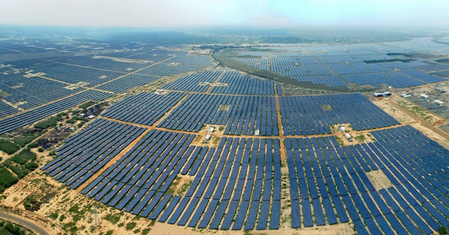
India’s renewable energy expansion is gaining recognition as a model for balancing energy security and transition amidst global disruptions. The country’s approach of combining renewable capacity expansion with conventional energy sources is being praised for ensuring both energy security and transition. India has surpassed a significant milestone, with over 50% of its installed electricity capacity now sourced from non-fossil fuel sources, ahead of its 2030 target.
Large-scale renewable projects, like the upcoming Khavda Renewable Energy Park in Gujarat, developed by Adani Green Energy Limited, are contributing to this transition. This project, with a planned capacity of 30 GW, integrates solar, wind, and battery storage to ensure a continuous power supply, addressing challenges associated with solar and wind energy intermittency.
India’s energy transition is characterized by active private sector involvement, with companies playing a significant role in executing large-scale projects under government policy. This collaborative approach, combined with faster project execution and streamlined approvals, has facilitated India’s rapid scaling up of renewable infrastructure. In contrast, several advanced economies globally have struggled to meet clean energy targets due to regulatory hurdles, supply chain constraints, and project execution delays.
New York, for instance, has faced challenges in renewable energy rollout due to regulatory hurdles, permitting issues, and infrastructure bottlenecks, despite ambitious climate goals. Governor Kathy Hochul has acknowledged the need to reassess aspects of the state’s energy strategy amidst rising costs and implementation constraints. The comparison between India and New York has drawn attention, with experts highlighting execution, policy flexibility, and public-private coordination as key differentiators.
