


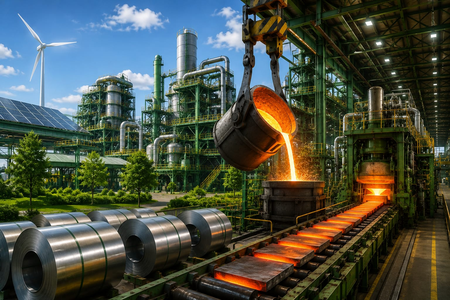
India’s move towards green steel production could potentially save the country close to $1 trillion in coking coal import expenses and enhance its standing in global export markets. A study by the India Energy and Climate Center at the University of California, Berkeley highlighted that India’s future steel expansion might lead to massive coking coal imports if traditional steelmaking methods persist.
Neelima Jain, the Director for Industrial and Trade Policy at IECC, emphasized that India is facing a critical juncture in its steel industry. The report suggested that if India continues to rely on imported coking coal, it could expose itself to currency and price volatility risks in a crucial industrial sector.
The study projected that India could double its steelmaking capacity over the next ten years, with a significant portion still following coal-intensive methods. It estimated that operating such capacity would necessitate about 161 million tonnes of coking coal annually, with a substantial portion likely to be imported.
The IECC study advocated for leveraging India’s abundant renewable energy resources to facilitate green hydrogen-based steelmaking, potentially reducing costs and enhancing competitiveness in the global market.
The report also cautioned about potential challenges from international carbon-related trade barriers, particularly the European Union’s Carbon Border Adjustment Mechanism, which could impact India’s carbon-intensive steel exports.
