


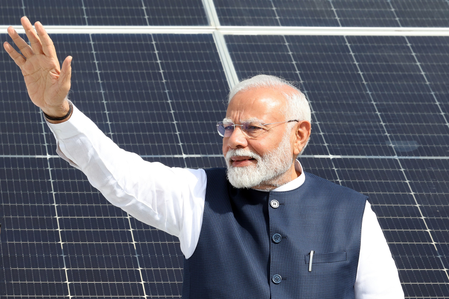
India’s solar energy capacity has surged significantly over the past 12 years, increasing from 2.8 GW in 2014 to 155 GW in 2026, as stated by Union Minister Kiren Rijiju. This growth, attributed to Prime Minister Narendra Modi’s leadership, reflects the nation’s strides in clean energy development. Rijiju emphasized that this expansion underscores India’s commitment to enhancing energy security and promoting renewable energy adoption.
More than 40 lakh households in India are now benefiting from solar energy initiatives, according to Rijiju. He also noted the rising involvement of farmers in the renewable energy sector, highlighting their dual role as energy producers and food suppliers. The minister emphasized that the expansion of solar energy infrastructure is a crucial move towards a sustainable and secure future, aligning with India’s broader clean energy goals.
India’s focus on expanding renewable energy capacity is part of its strategy to reduce reliance on fossil fuels, enhance energy accessibility, and shift towards cleaner energy sources. This progress is occurring within India’s climate-tech ecosystem, supported by policy measures, investments, and energy security priorities. Recently, Union Petroleum and Gas Minister Hardeep Singh Puri announced a milestone achievement of connecting 40 lakh homes to rooftop solar power through the ‘PM Surya Ghar Muft Bijli Yojana’, emphasizing the initiative’s role in empowering citizens, promoting self-reliance, and environmental conservation.
