


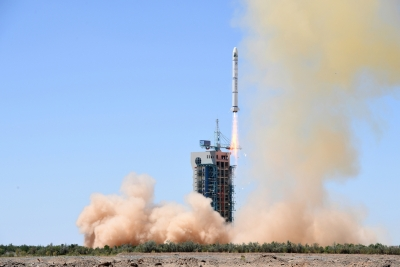
India’s space industry is experiencing remarkable growth due to government reforms that have welcomed private involvement. The government revealed that over 400 space startups are now active in the country, a significant increase from just one in 2014. Skyroot Aerospace’s upcoming Vikram-1 mission, set to be India’s first privately developed orbital launch vehicle, exemplifies this transformation.
Scheduled between July 12 and August 4 under Mission Aagaman, the Vikram-1 launch aims to validate India’s indigenous commercial launch capabilities and showcase the success of the Indian Space Policy 2023. The policy has opened the entire space value chain to private entities, allowing them to engage in satellite manufacturing, launch services, space applications, and downstream services.
India’s space economy, currently valued at around $8.4 billion, is expected to grow significantly to $40-45 billion by 2030 and further to $100 billion by 2040. This growth is attributed to continuous policy support, enabling regulations, and stronger public-private partnerships. The Vikram-1, developed by Skyroot Aerospace, is a key player in this expansion, with the capability to place payloads of up to 350 kilograms into Low Earth Orbit (LEO).
The maiden mission of Vikram-1 will deploy various customer payloads into a 450-kilometer orbit, including satellites and technology demonstration payloads. The Indian National Space Promotion and Authorisation Centre (IN-SPACe) has been instrumental in facilitating private participation by providing a stable regulatory framework and access to ISRO facilities and expertise. As of June 2026, IN-SPACe had registered over 4,500 organizations and facilitated significant investments into Indian space startups.
