


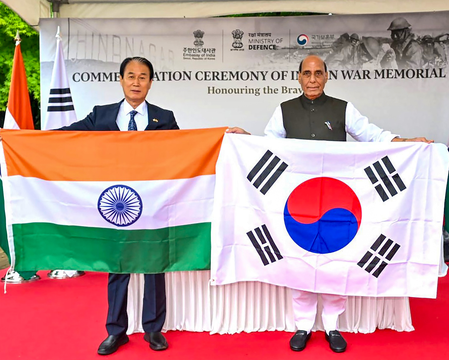
India recently finalized agreements with New Zealand, South Korea, and Russia, enhancing its strategic autonomy. These deals signify a deliberate shift in how India is using trade and defense policies to secure its autonomy amid global uncertainties. The agreements, though varying in scale and context, highlight India’s strategy to broaden its economic and security options to avoid strategic vulnerabilities.
The Free Trade Agreement with New Zealand offers access to a developed market and entry points into the Oceania region. It also safeguards politically sensitive sectors like dairy and agriculture, demonstrating a balance between openness and domestic stability. The agreement with South Korea aims at structural integration into advanced industrial ecosystems, emphasizing defense dimensions in India’s engagements.
India’s ongoing defense and energy collaboration with Russia showcase a multi-vector approach, emphasizing the country’s pursuit of strategic autonomy. These agreements are not just standalone deals but are part of a broader strategy to diversify partnerships, sectors, and geographies. India’s approach is forward-looking, aiming to hedge against geopolitical uncertainties.
The deals reflect India’s push for self-reliance in defense production while maintaining global integration. They signal a move towards selective integration, absorbing technology, enhancing domestic capacity, and reducing dependence gradually. The agreements also have geopolitical implications, especially concerning regional dynamics with China.
India’s efforts to enhance trade relations with South Korea, focusing on areas like semiconductors, shipbuilding, and clean energy, aim to integrate the country into high-value supply chains. The expansion of defense industrial cooperation with Seoul indicates a shift towards co-development and technology transfer, promoting indigenous capability.
In a changing global landscape where trade intersects with national security and technology control, these agreements serve as tools to manage risks. By diversifying agreements, countries like India aim to reduce reliance on any single partner or axis, navigating complex international relationships. India’s evolving policy reflects strategic triangulation, emphasizing diversification as a core aspect of autonomy.
Despite the benefits, expanding trade agreements may expose domestic sectors to competition and structural imbalances. India’s trade relationships with countries like South Korea highlight the need for addressing asymmetries to avoid widening trade imbalances. Deeper integration into global value chains may also bring expectations that could impact India’s autonomy over time.
India’s trade and defense policies are transitioning from defensive postures to strategic tools. The agreements with New Zealand, South Korea, and Russia signify a broader global shift and India’s commitment to maintaining autonomy in an evolving global order.
