


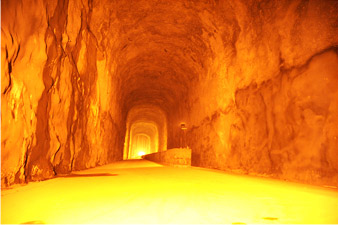
The Indian government disclosed that the strategic crude oil reserves in the country currently hold about 3.372 million metric tonnes, equivalent to 64% of the total storage capacity. These reserves, managed by the Indian Strategic Petroleum Reserve Limited (ISPRL), are spread across Andhra Pradesh and Karnataka, serving as a safeguard against short-term supply disruptions. The quantity of crude oil in these reserves fluctuates based on market conditions and actual consumption, with the current stock representing 64% of the total storage capacity.
In a move to enhance energy security, the government has approved the establishment of two additional commercial-cum-strategic petroleum reserve facilities in Odisha and Karnataka, with a combined storage capacity of 6.5 million metric tonnes. To diversify crude oil sources and reduce reliance on any single region, oil and gas public sector enterprises in India import crude oil from 41 countries, including newer suppliers like the USA, Nigeria, and Canada, alongside traditional suppliers from the Middle East. This strategic sourcing approach aims to mitigate risks and ensure a stable supply of crude oil for the country’s energy needs.
India’s efforts to diversify its oil and gas imports have been driven by concerns over global trade routes, particularly the Strait of Hormuz, through which a significant portion of the world’s oil and gas shipments pass. With nearly 70% of its oil imports now originating from non-Gulf countries, India has successfully broadened its import base, reducing its dependence on Middle Eastern suppliers and enhancing energy security in the face of geopolitical uncertainties.
