


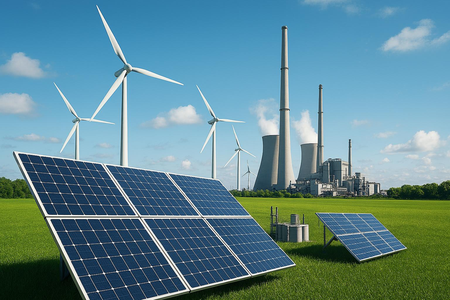
India is being recognized as a potential global model for developing nations looking to industrialize without heavy reliance on fossil fuels, as per a recent analysis by energy think tank Ember. The report, authored by energy experts Kingsmill Bond and Sumant Sinha and cited by Forbes, highlights India’s rapid adoption of solar power, electrification, and clean technologies. This shift challenges the traditional model of economic growth centered on coal, oil, and gas.
Historically, countries like the West and China progressed from biomass to coal and fossil fuels before transitioning to cleaner energy sources. However, India seems to be taking a different path by embracing what the analysis terms an “electrotech fast-track.” The country is moving towards an electricity-centric economy fueled by solar energy, batteries, electric vehicles, and digital technologies, avoiding long-term dependence on fossil fuels.
While Indian cities like New Delhi grapple with severe air pollution from coal plants, vehicle emissions, and agricultural burning, India’s energy transition trajectory diverges significantly from the fossil-heavy industrialization route of Western nations and China. Solar power now contributes nearly 9% to India’s electricity generation, a substantial increase from around 0.5% a decade ago.
Ember’s analysis reveals that India has achieved a 5% solar share in electricity generation at a lower GDP per capita compared to China, indicating an early integration of renewable energy into India’s industrial growth phase. The country is also outpacing China in electrifying transportation and surpassing China’s per capita solar and wind electricity generation at similar income levels.
Despite these advancements, India’s energy transition is not yet complete, with coal still playing a significant role in the energy mix. Challenges such as grid limitations, storage deployment, land acquisition, financial strains in distribution companies, and reliance on coal pose hurdles. Ember notes that solar-plus-storage systems in India are nearly half the cost of new coal plants, with renewable technologies becoming more cost-effective while coal plants face reduced utilization rates.
