


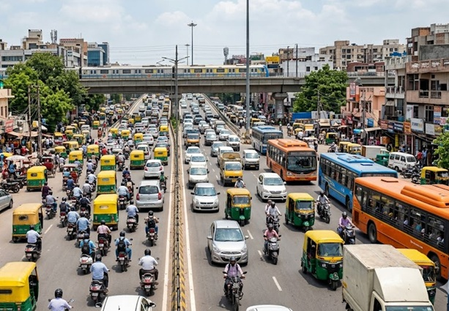
India’s vehicle fleet has exceeded 413 million vehicles, a significant increase from around 90 million in 2006. The Indian School of Public Policy (ISPP) initiated a review of the 2006 National Urban Transport Policy, emphasizing the need for a revamped urban transport framework due to rapid urbanization. The review highlighted the discrepancy between the policy’s vision for public and non-motorized transport and the actual outcomes, suggesting the necessity for a new policy in 2026 to address current challenges.
The launch event of the review, conducted by ISPP’s Centre for Urban Transitions (ICUT), attracted transport and policy experts. It was observed that the current policy implementation often focused on individual metro rail projects without integration into broader mobility networks and land-use planning. The report underscored the inadequate attention given to critical urban transport planning aspects such as parking management, urban freight movement, and climate resilience.
Dr. Parth Shah, Dean and Co-founder of the Indian School of Public Policy, highlighted the historical neglect of comprehensive urbanization policy in India, leading to exacerbated issues targeted by the 2006 urban transport policy. BVR Subrahmanyam, former CEO of NITI Aayog, emphasized the necessity of embedding urban transport in a broader urbanization framework to manage congestion and foster more livable cities for India’s economic growth driven by urban centers.
Sanjiv Sahai, former Managing Director of DIMTS and former Secretary of the Ministry of Power, stressed the importance of enhancing public transport to encourage its use over private vehicles for urban mobility. He emphasized the need to make public transport more convenient, accessible, and reliable to shape the future of urban mobility positively.
