


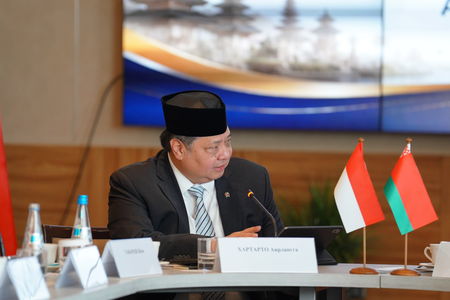
Indonesia will prolong its work-from-home policy for civil servants, state-owned enterprise employees, and private sector workers by two months due to ongoing geopolitical tensions in the Middle East. The Coordinating Minister for Economic Affairs, Airlangga Hartarto, mentioned that the government is closely monitoring the situation and has not yet specified the exact extension date. Under this policy, civil servants work from home on Fridays, while in-office work continues from Monday to Thursday. Private companies and state-owned enterprises are permitted to have one WFH day per week.
The government ensures that this arrangement will not impact employees’ salaries, benefits, or annual leave entitlements. Sectors requiring on-site operations such as healthcare, energy, infrastructure, public services, retail, manufacturing, and tourism are exempt from this policy. Depending on global developments, the extension of this policy could be further prolonged.
US President Donald Trump recently issued a strong warning to Iran, emphasizing that the US will not allow Iran to possess a nuclear weapon. Trump stated that failure to prevent this could lead to a broader conflict extending beyond the Middle East. Negotiations with Iran are ongoing, with Trump emphasizing a decisive outcome. He also addressed reports of Iran discussing toll charges with Oman for ships passing through the critical oil shipping lane, the Strait of Hormuz.
Trump emphasized the importance of keeping the Strait open and free for international navigation, asserting US military control over maritime traffic related to Iran through naval operations in the region. He claimed significant degradation of Iranian military capabilities due to US military strikes and operations. Trump highlighted the US’s enhanced drone and anti-drone capabilities during the conflict, stating that highly enriched uranium would not be allowed to remain with Iran under any future agreement.
