


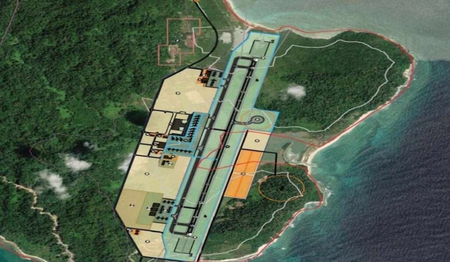
An industry leader expressed support for the Great Nicobar Project, highlighting its crucial role in safeguarding India’s communication routes, maritime interests, and national security. Emphasizing the significance of infrastructure development in the broader national interest, he noted that economic and strategic considerations often underpin such initiatives. Despite acknowledging the ecological concerns raised post-approval, he stressed the necessity of evaluating projects like these for their long-term benefits.
The leader referenced the extensive infrastructure growth in India, citing examples such as national highways and projects associated with the Char Dham Yatra pilgrimage. While recognizing the ecological disruptions caused by development, he mentioned concurrent efforts like greening initiatives aimed at mitigating environmental impacts. Regarding the Great Nicobar endeavor, he underscored the imperative for India to secure its sea lanes and maritime ecosystem amidst heightened global competition for strategic shipping routes.
In the context of the project’s objectives, it aims to elevate Great Nicobar Island into a key strategic maritime and economic center leveraging its proximity to the global East–West shipping route. The initiative seeks to decrease India’s reliance on foreign transshipment ports like Colombo and Singapore while bolstering its presence in the Andaman Sea and Southeast Asia. Key components include an international container transshipment terminal, an international airport, a gas-solar power plant, and a planned township, all strategically positioned to attract global cargo traffic.
