


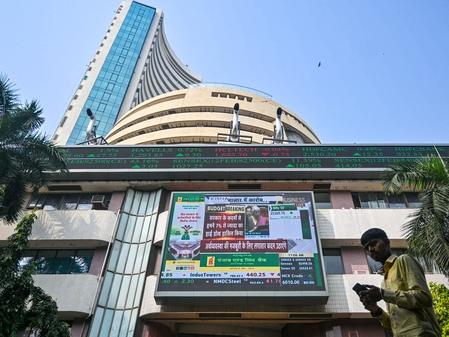
Investors are anticipated to approach the upcoming week with caution due to escalating tensions between the US and Iran, alongside factors such as rising crude oil prices, the ongoing March quarter earnings season, foreign fund outflows, and rupee depreciation, all of which are expected to influence the Indian stock market’s trajectory. The Indian benchmark indices experienced consecutive losses, primarily driven by declines in banking and financial stocks amidst increasing geopolitical uncertainties. The Sensex concluded 516 points lower at 77,328.19, while the Nifty closed down by 151 points at 24,176.15.
Experts analyzing the Nifty’s technical outlook highlighted resistance levels at 24,500 and 24,600 on the upside, with support levels at 24,000 and 23,800 on the downside. A potential breakdown below 23,800 could lead to heightened selling pressure, according to an analyst’s assessment. Market participants will closely monitor the US-Iran conflict developments, especially following tensions over the Strait of Hormuz crisis.
Geopolitical tensions have also impacted global crude oil prices, with initial spikes later moderating amid hopes for reduced hostilities. However, concerns persist regarding potential supply disruptions through the Strait of Hormuz, maintaining investor apprehension. Additionally, attention will be on the March quarter earnings season, with over 400 companies set to disclose their results in the upcoming week.
Corporate earnings and management insights are expected to offer indications on demand patterns, margin constraints, and the broader economic perspective. Analyzing the Bank Nifty’s technical outlook, experts identified immediate downside support in the 54,600–54,200 range in case of renewed selling pressure. Resistance levels are noted at 56,400 and 56,800, with traders advised to uphold strict stop-loss strategies amidst the current market volatility.
