


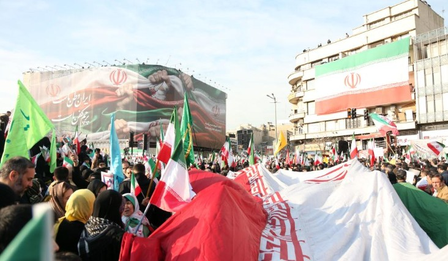
The office of Iran’s President Masoud Pezeshkian has disclosed a list of 2,986 individuals who lost their lives during the recent turmoil in the country. This list, which comprises civilians and security personnel, was compiled based on data provided by the Iranian Legal Medicine Organisation at Pezeshkian’s directive. The total death toll reported is 3,117, with 131 victims yet to be identified. The president’s office has assured the release of an additional list once these identities are confirmed, as per the Xinhua news agency.
The statement from the office underscores a commitment to transparency and accountability, highlighting that all the deceased were Iranian citizens. It also ensures that every grieving family will be heard. The unrest, which unfolded from late December to January, originated from protests against the drastic devaluation of the rial and spread across various Iranian cities. Initially peaceful, the demonstrations turned violent, resulting in casualties and significant damage to public infrastructure, such as mosques, government edifices, and financial institutions. Tehran has attributed the upheaval to the United States and Israel.
Iran’s Army Chief, Amir Hatami, cautioned last week that any misstep by the United States would imperil not only its security but also that of Israel and the wider West Asia region, as per the official news agency IRNA. Hatami, speaking at a national event in Tehran, stressed the preparedness of Iran’s armed forces amidst escalating tensions with Washington. He asserted that the Iranian military is on high alert, closely monitoring regional developments and ready to act swiftly if necessary.
Hatami further warned that any miscalculation by the adversary would not only endanger its own safety but also that of Israel and the surrounding area. He welcomed the declarations of neighboring nations pledging not to allow their territories or airspace to be used against Iran, noting the shared interest in regional stability. Hatami emphasized the importance of mutual respect in resolving issues, urging the other party to treat the Iranian people with dignity.
The escalating tensions between Tehran and Washington have been underscored by US President Donald Trump’s recent statements. Trump mentioned the deployment of a significant naval force, led by the aircraft carrier Abraham Lincoln, towards Iran, cautioning that time is running out for Tehran to engage in negotiations. Additionally, Trump responded to Iranian Supreme Leader Ali Khamenei’s warning of a potential regional conflict, stating that the consequences of a failed nuclear deal would be revealed. Khamenei had earlier stated that any US-initiated conflict with Iran would escalate into a broader regional war.
