


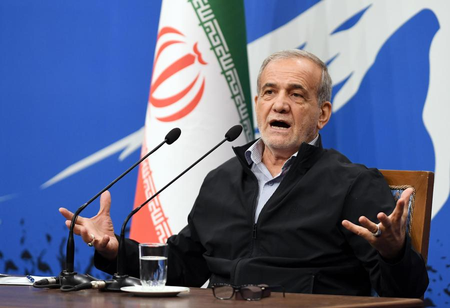
As the conflict between the United States, Israel, and Iran enters its third week, Tehran has outlined three key conditions for resolving the situation. Iranian President Masoud Pezeshkian emphasized the importance of recognizing Iran’s rights, providing compensation for damages incurred during the war, and ensuring firm international guarantees against future aggression. Despite Iran’s commitment to peace, the conflict persists as Washington and Tel Aviv are yet to meet these demands.
President Pezeshkian, after discussions with Russian and Pakistani leaders, reiterated Iran’s stance on ending the war. He stated that the only path to peace lies in acknowledging Iran’s legitimate rights, offering reparations, and establishing robust international assurances to prevent future hostilities. Tehran attributes the conflict’s origins to attacks by the US and Israel and insists on concrete security and rights assurances before considering a ceasefire.
While the conflict shows no signs of immediate resolution, US President Donald Trump affirmed the continuation of military operations. Trump, addressing a rally in Kentucky, expressed the US’s determination to see the conflict through to its conclusion. Despite hints at a possible end, Trump emphasized the US military’s readiness to act and suggested limited remaining targets for strikes.
The ongoing conflict has led to significant casualties and disruptions in the region, with an estimated 2,000 fatalities, primarily Iranians and Lebanese. Children have been profoundly affected, with over 1,100 reported deaths or injuries according to UNICEF. Global energy markets have reacted to the escalating tensions, particularly concerning disruptions in the vital Strait of Hormuz, a key oil transit route.
