


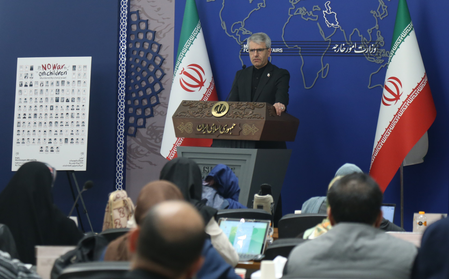
As the ceasefire deadline looms, talks between Iran and the United States face uncertainty. Tehran’s reluctance to commit to negotiations by the end of Tuesday complicates the situation. President Donald Trump remains optimistic, emphasizing the necessity of sending a delegation for talks.
The Strait of Hormuz, crucial for global oil and gas transport, remains a focal point. Iranian officials have stated that no delegation has been sent to Islamabad, echoing the stance that talks will not proceed. Despite Trump’s confidence in a positive outcome, Vice President JD Vance’s departure for talks has been delayed.
The looming end of the ceasefire adds pressure to the situation. Trump has expressed reluctance to extend the ceasefire, hinting at a more assertive approach. The uncertainty surrounding the talks has implications for Pakistan’s diplomatic efforts. Islamabad awaits confirmation of Iran’s participation, emphasizing the critical nature of Iran’s decision.
The talks’ continuity faces challenges due to recent events. The US seizure of an Iranian ship and Iran’s actions in the Strait of Hormuz have complicated matters. Trump’s demands for Iran to abandon nuclear ambitions and missile programs clash with Tehran’s stance. Internal divisions in Iran further complicate the negotiation process.
