


The Iranian army announced on Friday that its naval forces captured an oil tanker named “Ocean Koi,” which was attempting to disrupt Iran’s oil exports under the guise of regional circumstances. The tanker, carrying Iranian oil, was involved in a “special operation” in the Gulf of Oman to undermine Iran’s national interests. Subsequently, the naval forces escorted the tanker to Iran’s southern coasts and handed it over to the country’s judicial authorities.
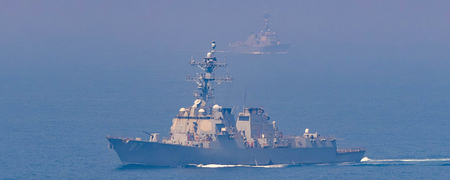
In a separate incident, the Iranian army reported that its naval forces engaged US destroyers using cruise missiles, rockets, and combat drones in response to alleged attacks on Iranian oil tankers near the Strait of Hormuz and within Iran’s territorial waters. The US destroyers altered their course and departed the area following the confrontation.
Meanwhile, the US Central Command disclosed that American forces disabled two tankers, M/T Sea Star III and M/T Sevda, before they could enter an Iranian port on the Gulf of Oman, citing a breach of the ongoing US blockade. A US Navy F/A-18 Super Hornet from USS George H.W. Bush intervened by disabling both tankers through targeted munitions, preventing their entry into Iran.
The Iranian Foreign Ministry strongly denounced the US attacks, labeling them as a violation of an April 8 ceasefire agreement between the conflicting parties. Additionally, Iranian Foreign Minister Seyed Abbas Araghchi criticized the US for opting for a “reckless military adventure” instead of pursuing diplomatic solutions. Araghchi emphasized Iran’s resilience against pressure and highlighted the country’s missile capabilities, surpassing US intelligence estimates.
Iran alleged that the US conducted airstrikes on its southern cities, the capital Tehran, and attacked two Iranian vessels near the Strait of Hormuz in collaboration with regional states. In response, Washington clarified that it seeks no escalation and reaffirmed the validity of the April 8 ceasefire agreement.
