


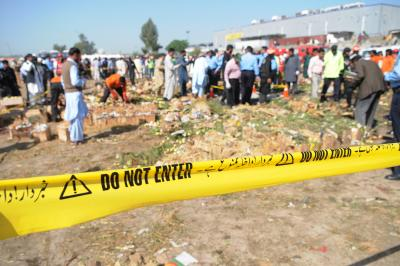
The recent bombing at a mosque in Islamabad by the Islamic State Khorasan Province (ISKP) highlights the exploitation of Pakistan’s failing security measures. The ISKP had been relatively quiet in Pakistan for about a year before this incident. The group’s last claimed attack in Pakistan was in Balochistan’s Mastung on April 15, 2025, resulting in three deaths.
Security analysts note that the ISKP has been conducting attacks in Pakistan since 2015, with a significant increase in attacks after 2022. In total, there have been 90 attacks claimed by the ISKP since then. The group started moving major operations from Afghanistan to Pakistan in 2021, aiming to establish an Islamic state in Pakistan.
The recent attack in Islamabad coincided with the Balochistan Liberation Army launching ‘Operation Herof 2.0’ against Pakistani security forces. Exploiting a security vacuum, the ISKP strategically targeted Islamabad when security was lax. Officials also suggest that the attack was a message to the United States, following US air strikes against the Islamic State in Syria and Africa.
The ISKP’s recent attacks have expanded beyond Balochistan to major cities like Islamabad and Karachi. These high-impact attacks reflect the group’s intent to strengthen itself in Pakistan and challenge the Taliban in Afghanistan. By taking advantage of security breakdowns in Pakistan, the ISKP aims to weaken the country and establish control.
Officials observe a shift in attack patterns, indicating the ISKP’s evolving strategy. Despite previous agreements, the ISKP has continued to target Pakistan, refusing to align with Islamabad. The group’s activities in Pakistan underscore the failure of Pakistan’s strategic moves and security arrangements.
