


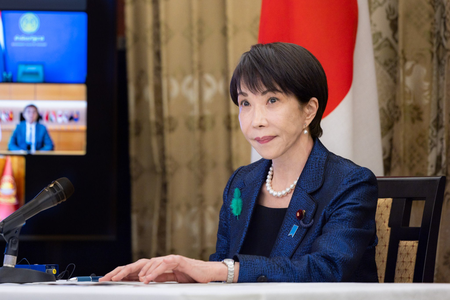
Japanese Prime Minister Sanae Takaichi recently chaired a crucial meeting focusing on the Middle East scenario. Japan aims to secure about 60% of its crude oil requirements for May through alternative supply routes that bypass the Strait of Hormuz.
During the meeting, Takaichi emphasized diversifying oil sources beyond the Middle East and the U.S. to include Central Asia, Latin America, and the Asia-Pacific regions. Japan has already ensured adequate supplies for dialysis tubing until September by prioritizing petroleum-based materials for overseas Japanese facilities.
Takaichi directed the relevant minister to maximize the POWERR Asia framework for ensuring stable oil supplies from October onwards. Additionally, necessary quantities of plastic agricultural materials, such as mulch sheets and rice bags for the spring season, have been successfully procured.
In response to future procurement concerns, Takaichi pledged to closely assess supply chains and collaborate with raw material manufacturers to maintain a steady supply and avoid disruptions in food provision. The Japanese government announced plans to release additional oil reserves equivalent to around 20 days’ worth from May 1 to stabilize the country’s energy supply.
The decision for the second oil reserve release, totaling 5.8 million kiloliters valued at 540 billion yen (USD 3.4 billion), follows an initial release of 50 days’ worth of oil reserves to address energy stability post-conflict in West Asia. Japan, heavily reliant on West Asia for over 90% of its crude oil imports, with a significant portion passing through the Strait of Hormuz.
