


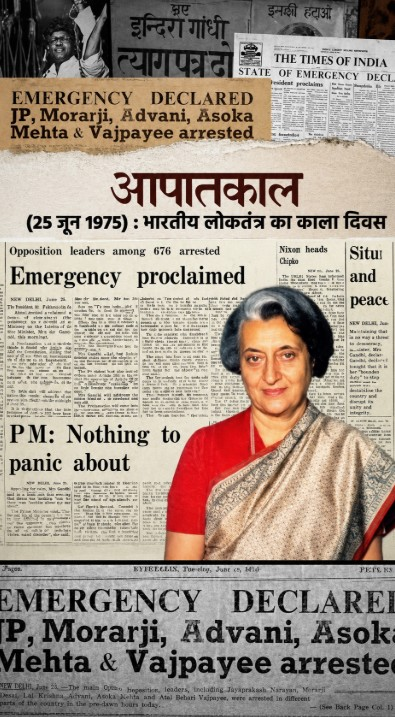
In the mid-1970s, a house in Patna’s Jagat Narayan Road was a hub of activity where political leaders critical of Prime Minister Indira Gandhi’s rule gathered. Jayaprakash Narayan, known as “JP,” led the call for “Sampoorna Kranti” or Total Revolution, aiming to transform India’s political, social, economic, and cultural spheres. JP’s movement went beyond governance changes, advocating for societal restructuring based on Gandhian principles and democratic decentralization.
During the Emergency in 1975, imposed by Indira Gandhi, JP emerged as a symbol of resistance, urging the armed forces and police to defy “illegal orders.” His influence led to a nationwide railway strike, posing a challenge to the government. Despite facing imprisonment and declining health, JP’s moral authority galvanized the Opposition and grassroots movements against authoritarianism.
Arrested under the Maintenance of Internal Security Act during the Emergency, JP’s health deteriorated, leading to his eventual release in 1976 due to medical reasons. His death in 1979 raised questions, with some attributing it to his time in incarceration. Posthumously awarded the Bharat Ratna in 1999, JP’s legacy as “Lok Nayak” transcended party lines, uniting diverse political factions against authoritarian rule.
JP’s ‘Prison Diary’ reflected his unwavering commitment to India’s democratic soul, inspiring a generation to resist oppression. His leadership during the Emergency culminated in the formation of the Janata Party, which defeated Indira Gandhi in the 1977 elections. JP’s legacy endures as a beacon of courage and moral leadership, symbolizing the fight for democracy and freedom in India.
