


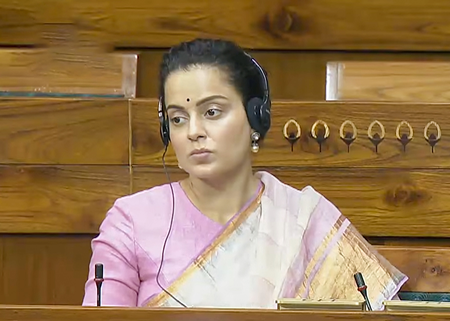
Bharatiya Janata Party (BJP) MP Kangana Ranaut lauded Prime Minister Narendra Modi in the Lok Sabha, hailing him as a strong advocate for women’s empowerment in India. She highlighted that many in the nation perceive his leadership as pivotal in promoting gender equality. Ranaut, representing the Mandi constituency in Himachal Pradesh, expressed how women in India see PM Modi as a significant figure supporting gender parity and increased female representation in public spheres.
During a discussion on the Constitution (131st Amendment) Bill, 2026, Ranaut emphasized the Prime Minister’s unwavering belief in the potential, capabilities, and aspirations of Indian women across various sectors. She underscored that this trust has led to enhanced participation and confidence among women. Ranaut reiterated her appreciation for PM Modi’s commitment to women, stating that the daughters of India consider him a leading feminist and will always be grateful to him for his support.
The ongoing special session of Parliament is centered on three crucial Bills aimed at reforming aspects of India’s democratic framework. These proposals include plans to augment the Lok Sabha’s size from the current 543 seats and to introduce one-third reservation for women in the lower House. Ranaut strongly endorsed these legislative changes, viewing them as progressive steps towards bolstering women’s representation and engagement in legislative bodies nationwide.
In addition to advocating for core reservation provisions, Ranaut supported linking the Bill with the delimitation exercise, deeming it a constitutional imperative. She argued that aligning representation with demographic realities through this process is crucial. Emphasizing the timeliness and necessity of redrawing electoral boundaries to mirror India’s evolving population patterns, Ranaut urged fellow lawmakers to back these reform initiatives.
Amid discussions on augmenting women’s political participation, the proposed legislation aims to broaden opportunities for women not only in Parliament but also in state assemblies. Ranaut’s participation in the debate showcased her endorsement of a comprehensive policy approach that aims to integrate women more substantially into governance and decision-making processes. The parliamentary discourse continued to deliberate on the ramifications of increased representation and structural reforms in fortifying democratic engagement.
