


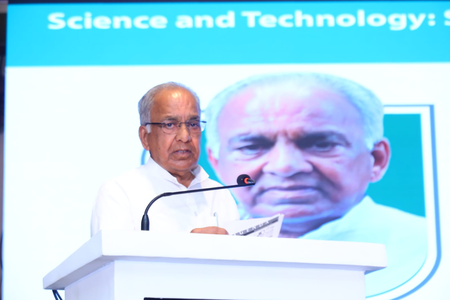
The Karnataka government has requested the Centre and NCERT to add a dedicated chapter on groundwater conservation and management to the national school curriculum. This initiative aims to address concerns regarding water scarcity and climate change. Karnataka’s Minor Irrigation and Science & Technology Minister, N.S. Boseraju, highlighted the need for a comprehensive “Groundwater” chapter in NCERT textbooks under the National Education Policy 2020.
Existing NCERT Class 10 Social Science textbooks focus mainly on surface water, with limited attention to groundwater, despite its significance as India’s primary freshwater source. Groundwater constitutes about 97% of Earth’s liquid freshwater, supporting nearly 50% of domestic water usage and 25% of agricultural needs in India.
The minister emphasized that climate change, diminishing surface water availability, and rising water consumption are exerting immense pressure on groundwater reserves nationwide. Karnataka’s communication to the Centre emphasized the escalating number of over-exploited, critical, and semi-critical groundwater zones in India over the past two decades, coupled with deteriorating groundwater quality due to contamination and unsustainable extraction.
The Karnataka government stressed the importance of introducing groundwater literacy at the school level to combat future water insecurity effectively. Comparing with global education systems, Karnataka pointed out that countries like the United States already integrate detailed groundwater-related lessons in their school curricula. The state urged NCERT to include similar scientific and practical learning modules in the revised curriculum planned for the academic year 2027–28 under the National Curriculum Framework for School Education 2023.
Proposed topics for inclusion encompass rainwater harvesting, managed aquifer recharge technologies, nature-based solutions like constructed wetlands and green roofs, aquifer mapping, groundwater modeling, and the utilization of advanced monitoring systems such as IoT and remote sensing technologies. Karnataka also recommended incorporating lessons on national water conservation programs led by the Ministry of Jal Shakti, the Central Ground Water Board, and NITI Aayog.
Boseraju stressed that addressing future water scarcity requires more than just infrastructure projects; it necessitates instilling a deep understanding of water conservation starting from school. With climate change reducing surface water availability, the significance of groundwater for survival is escalating. Hence, the urgent need for a comprehensive chapter on groundwater in the NCERT curriculum. The Karnataka government expressed confidence in a positive response from the Centre.
