


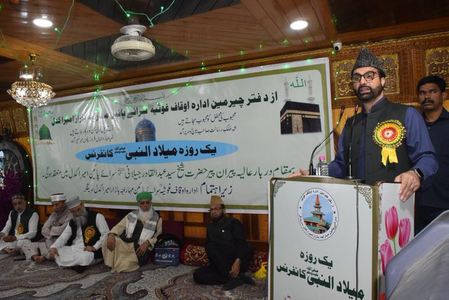
Kashmir’s chief Islamic cleric, Mirwaiz Umar Farooq, emphasized the role of mosques, khanqahs, and imambaras in fostering social reform and unity. He highlighted the historical significance of these places of worship as centers of learning, guidance, and social transformation, beyond their primary function of prayer.
Mirwaiz Umar stressed the importance of these institutions in addressing contemporary challenges such as moral decline, materialism, and social discord. He urged for a revival of their traditional role in guiding society, nurturing moral values, and engaging with social issues for the betterment of the community.
Emphasizing the need to preserve Kashmir’s religious and cultural heritage, the cleric called for these religious institutions to uphold values of coexistence, tolerance, and social responsibility. He underscored the importance of reflecting the teachings of the Prophet in individual behavior and societal interactions, promoting justice, compassion, and service to humanity.
