


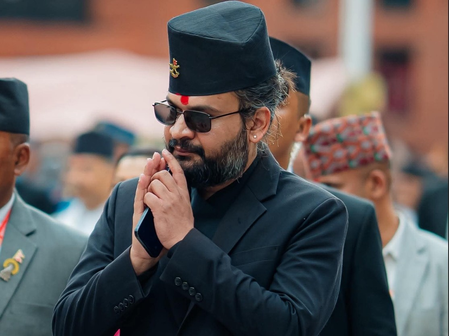
Kathmandu Metropolitan City Mayor Balen Shah was actively meeting with political leaders, especially from newly formed political parties and Gen Z groups, on Thursday. Shah, known for his efforts to enhance public infrastructure and criticism of established political parties, is gaining support to challenge these parties before the upcoming parliamentary elections in March next year.
Shah, an architect and rapper, played a key role in forming the current government led by Prime Minister Sushila Karki after the Gen Z movement in early September. Notably, Shah’s meeting with Rastriya Swatantra Party (RSP) President Rabi Lamichhane is part of the growing collaboration between Gen Z leaders and new political forces ahead of the elections.
Lamichhane, a former media personality and leader of the fourth-largest party in the dissolved House of Representatives, has been working to unite Gen Z leaders and new political forces to strengthen his party’s position. The recent meeting between Lamichhane and Shah, along with Minister Kulman Ghising, has sparked speculation about a potential alliance for the elections.
Former Prime Minister Baburam Bhattarai and other Gen Z leaders also emphasized the importance of collaboration with new political forces during their meeting with Shah. Discussions between Lamichhane and Shah suggest a possible joint effort to challenge established political parties in the elections, potentially reshaping Nepal’s political landscape.
Political analysts believe that Shah’s efforts to unite newer political forces could disrupt the existing power dynamics in Nepal’s politics. With a growing discontent among young people towards traditional parties, figures like Shah and Lamichhane are seen as unifying alternatives by Gen Z leaders.
Despite their rising popularity, Shah and Lamichhane are yet to present a clear economic and foreign policy vision, raising uncertainties about their governance approach if they come to power. While they may attract protest votes against established parties, their success hinges on articulating a coherent vision for the country’s future.
