


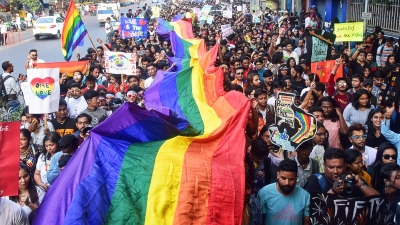
Members of Kolkata’s queer community, along with legal experts, are expressing serious worries about the Transgender Persons (Protection of Rights) Amendment Bill, 2026. They fear that the bill could limit the self-identification rights of transgender individuals. The bill, introduced by Union Minister for Social Justice and Empowerment Virendra Kumar, is criticized for potentially narrowing the definition of transgender identity and imposing additional procedural requirements for legal recognition.
Activists and legal experts argue that this proposed legislation deviates from the significant National Legal Services Authority v. Union of India (NALSA) verdict. In the NALSA verdict, the Supreme Court upheld the right of individuals to self-identify their gender without compulsory medical intervention. They question why transgender individuals are required to provide evidence of their gender identity while males and females are not. The bill has been deemed contrary to basic identity rights by a variety of Queer rights activists and legal experts.
Renowned Queer writer and rights activist Pawan Dhall highlights that the new Bill seeks to redefine a transgender person and mandates medical proof for legal recognition of that identity. Dhall emphasizes that the bill infringes on the free will of transgender community members by subjecting them to screenings for medical proof. He suggests that the Bill should undergo re-evaluation by the Parliamentary Standing Committee.
Senior advocate of Calcutta High Court, Kaushik Gupta, echoes Dhall’s concerns. Gupta points out that the new Bill’s altered definition of a ‘transgender’ person excludes the trans-man community, making them vulnerable. Additionally, the screening process required by the bill to establish a ‘transgender’ identity is viewed as discriminatory. Gupta emphasizes the necessity of nationwide consultations with transgender groups to ensure clarity on the subject.
