


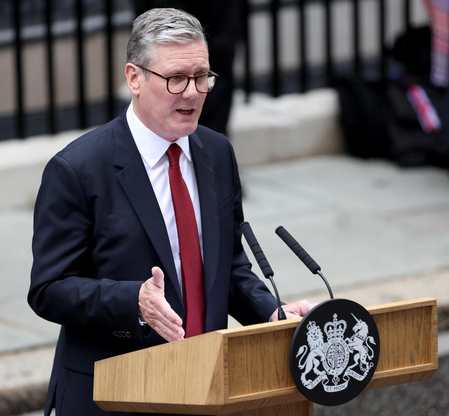
Britain’s Labour Party experienced significant losses in local elections, with Reform UK making notable gains, as per the final results. In England, Labour lost nearly 1,500 council seats and control of about 40 local councils, including some traditional strongholds. The Conservative Party also faced heavy losses, shedding over 500 council seats but managing to secure just over 800.
Reform UK emerged as a major winner, securing more than 1,400 council seats and taking charge of 14 local councils, many of which were traditional Labour or Conservative strongholds. Additionally, the Liberal Democrats and the Greens saw gains in the elections. In Scotland, the Scottish National Party maintained its position as the largest force in the 129-seat parliament with 58 seats, falling short of a majority. The Conservatives lost 19 seats, while Reform UK made significant progress by winning 17 seats, on par with Labour.
Meanwhile, in Wales, Labour faced a significant setback by only securing nine seats in the expanded 96-seat Welsh Parliament. Welsh First Minister Eluned Morgan lost her seat and subsequently announced her resignation as the Welsh Labour leader. Plaid Cymru became the leading party in the Welsh Parliament with 43 seats, followed by Reform UK with 34 seats. British Prime Minister Keir Starmer acknowledged the challenging results even before the full outcome was known, emphasizing the need to reflect and respond to the electorate’s message. Starmer vowed to outline the way forward in the upcoming days.
Despite growing calls for his resignation from some Labour MPs, Starmer affirmed his commitment not to step down abruptly and disrupt the country. Reform UK Leader Nigel Farage, speaking in Essex after his party’s election success, highlighted the historic shifts in voting patterns observed in various regions.
