


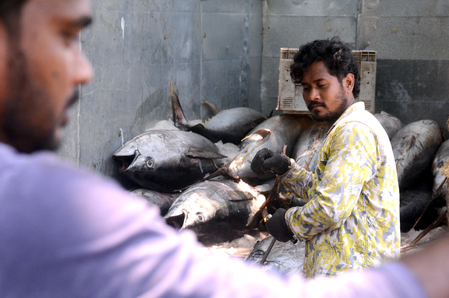
Lakshadweep aims to increase its annual tuna and tuna-like fish production to 50,000 tonnes over the next five years. The plan, developed by the ICAR-Central Marine Fisheries Research Institute, focuses on deep-sea fishing, mariculture, seaweed farming, and modernizing fisheries infrastructure to boost India’s blue economy. This strategy aims to create sustainable livelihoods for local fishing communities while ensuring marine resource conservation.
The roadmap, part of the Pradhan Mantri Matsya Sampada Yojana, includes initiatives in marine fisheries, mariculture, post-harvest management, value addition, marketing, infrastructure development, and capacity building. Key proposals involve adding 50 new deep-sea fishing vessels, expanding seaweed cultivation, establishing ornamental fish rearing units, and supporting small-scale ventures for local fishers and entrepreneurs.
Recognizing Lakshadweep’s marine potential, the plan highlights the vast lagoon area, territorial waters, and diverse marine species present in the archipelago. It emphasizes diversification into seaweed farming and ornamental fisheries, alongside investments in fisheries infrastructure like boat-building yards, cold storage facilities, and value addition units.
Inaugurating the consultation, Lakshadweep Fisheries Secretary Raj Tilak emphasized the administration’s commitment to enhancing fish production in the region. CMFRI Director Dr. Grinson George pledged scientific and technical support for expanding mariculture, seaweed cultivation, ornamental fish breeding, and other fisheries-based livelihood initiatives. The meeting involved various stakeholders, including government departments, fisheries agencies, fishermen, entrepreneurs, and cooperative societies from the islands.
