


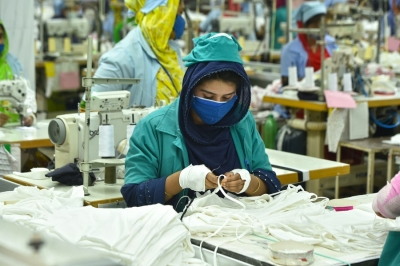
Large-scale layoffs of women have occurred in Bangladesh’s ready-made garment (RMG) industry, once a symbol of female economic empowerment. Initially comprising about 80% of the workforce in the 1980s and 1990s, the percentage of women in the industry dropped to 70% in 2005 and further decreased to around 53% in 2021 and 2023, as reported by various studies.
The reduction in female employment is linked to a skills gap resulting from new machinery and safety concerns surrounding night shifts. Some technologies in the sector require specific skills that female workers often lack, making them less preferred for certain roles. Additionally, safety issues arise when women are required to work night shifts on machines running continuously.
Reports indicate that nearly a third of female workers lack basic education compared to male counterparts. Men are often trained to operate a wider range of machinery, contributing to gender disparities in roles within the industry. Women face challenges in advancing to supervisory and managerial positions due to prevailing gender biases that favor men’s productivity.
Apart from technological advancements, factors leading to women losing jobs include factory closures due to political instability, financial issues, and declining international orders. Older women, particularly those with children, are opting to leave the industry and return to their villages due to worsening living conditions near factories.
Working conditions in the garment sector are described as strenuous, with long hours, minimal breaks, and poor health and safety standards. Verbal abuse from supervisors aiming to accelerate production is common, contributing to high turnover rates among women. Harassment and abuse, including sexual violence, are prevalent issues faced by female workers, impacting their decision to stay in the industry.
Moshrefa Mishu, president of the Garments Sramik Unity Forum, highlighted that despite the industry’s growth, women continue to be among the lowest-paid workers. The disparity in wages and working conditions underscores the challenges faced by women in the garment sector.
