


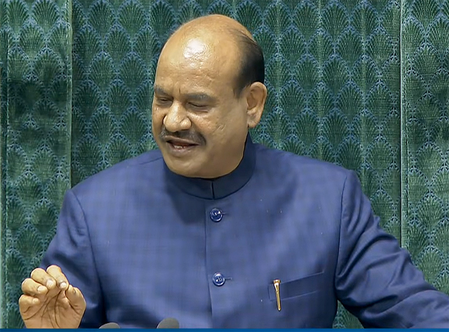
Lok Sabha Speaker Om Birla has chosen not to participate in House proceedings until the no-confidence motion is resolved, as per sources familiar with the matter. This decision, though not a procedural requirement, has been voluntarily made by Birla, who will refrain from entering the House regardless of any attempts by the government or the Opposition to convince him otherwise. The motion to oust the Speaker is anticipated to be addressed on March 9, marking the commencement of the second part of the Budget Session.
Sources have indicated that a minimum of 50 members must support the notice for the motion to be accepted, following which a discussion may be permitted by the Chair. The no-confidence motion against Birla is expected to be deliberated at the onset of the second phase of the Budget Session. On Tuesday, 118 MPs from Opposition parties jointly submitted a notice seeking the Speaker’s removal, alleging biased conduct by Birla in the House’s operations.
The Opposition, represented by a Congress MP, lodged the notice accusing Birla of repeatedly denying Opposition leaders, including Rahul Gandhi, the chance to speak during the debate on the Motion of Thanks to the President’s Address. The notice also highlighted the suspension of eight Opposition MPs. Allegations in the notice suggested that the Speaker presided over proceedings in a “blatantly partisan manner” and neglected to safeguard the democratic rights of Opposition members.
Despite the motion, the numerical success of the resolution seeking the Speaker’s removal appears unlikely. To pass a resolution for the Speaker’s removal, the Opposition would need the support of over half of the Lok Sabha’s total strength, which stands at 543. The ruling coalition, led by the Bharatiya Janata Party with 240 MPs and supported by NDA partners, holds a comfortable majority. In contrast, the Opposition, led by the Congress with 99 MPs, lacks the required numbers to oust the Speaker.
Trinamool Congress, while not endorsing the motion, proposed alternative methods to express dissent. Party MP Abhishek Banerjee suggested submitting a protest letter to the Speaker initially and waiting for a response before considering a no-confidence motion. Given the prevailing arithmetic, the motion is widely perceived as a symbolic gesture by the Opposition rather than a serious endeavor to remove the Speaker. Previous attempts to unseat the Speaker have historically been unsuccessful.
