


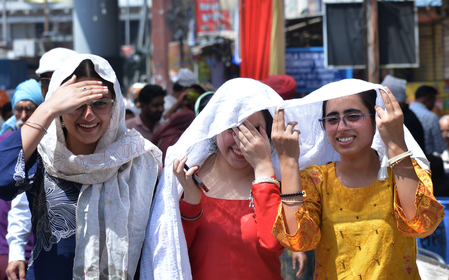
Most parts of Madhya Pradesh are currently experiencing a severe and prolonged heatwave, with temperatures soaring above 40 degrees Celsius in various cities. In Khajuraho, a popular tourist spot, the mercury touched 46.0 degrees Celsius, making it one of the hottest places in the region despite minor fluctuations.
Other cities like Sidhi recorded 44.6 degrees Celsius and Sheopur reached 44.8 degrees Celsius, indicating widespread extreme heat conditions. While most areas remained dry, some regions in Sagar division and isolated spots in Gwalior, Rewa, and Jabalpur divisions saw some rainfall.
Notable rainfall figures include 15.4 millimetres in Garhakota and 9.6 millimetres in Gonnour. Temperature patterns show a significant increase in heat levels across many districts, with Khajuraho hitting a maximum of 46 degrees Celsius and Pachmarhi recording a minimum of 15 degrees Celsius.
The heatwave has impacted areas like Chhindwara, Khajuraho, and Nowgong, with warm nights reported in Ujjain, Rewa, Satna, and Khajuraho. The Shahdol division saw a rise of about 2.5 degrees Celsius in maximum temperatures, remaining above normal in divisions like Bhopal, Ujjain, and Gwalior.
Current synoptic conditions reveal a western disturbance and multiple cyclonic circulations over Uttar Pradesh. The forecast until April 29 morning predicts light rainfall or drizzle with thunderstorms and lightning in isolated places such as Gwalior, Rewa, Satna, and Chhatarpur.
While the rest of the state is expected to stay dry, authorities have issued heatwave warnings for districts like Vidisha, Raisen, and Sagar. Some areas may experience gusty winds of 40 to 50 kilometres per hour along with lightning. Bhopal is forecasted to have clear skies with a maximum temperature of 43 degrees Celsius.
Looking ahead, the next 24 hours are expected to remain unchanged, followed by a gradual decrease of two degrees Celsius over the subsequent three days. Residents are advised to stay hydrated, avoid direct sunlight during peak afternoon hours, and wear light cotton clothing. Farmers are urged to provide adequate irrigation to crops and ensure livestock are sheltered in well-ventilated areas.
