


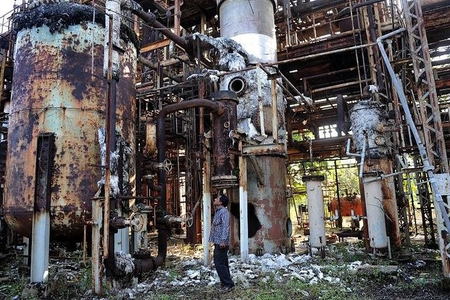
The Madhya Pradesh High Court has instructed the state government to present a comprehensive strategy for evaluating and addressing the polluted soil and water in and around the closed Union Carbide plant in Bhopal by March 23. This directive was issued during a hearing of a petition filed by an NGO advocating for the victims of the Bhopal Gas Tragedy, urging for the cleanup of contaminated areas and prompt action. The state government, in response to the petition, has informed the court that the cleanup plan, which includes assessing the polluted soil and water and initiating the cleanup process, is in progress and requested additional time.
The court, after considering arguments from both parties, scheduled the next hearing for March 23. Additionally, an affidavit submitted by the Deputy Secretary of the Bhopal Gas Tragedy Relief and Rehabilitation Department mentioned that a meeting was held on March 5 as per the directions of the Oversight Committee/Task Force established by the Supreme Court in 2023. The meeting, chaired by the Additional Chief Secretary, discussed various issues such as evaluating and remediating the polluted soil and water in and around the former UCIL premises, detoxification, and time-bound cleanup efforts.
The state government’s affidavit also highlighted plans to repurpose 87.74 acres of land, the former Union Carbide factory site, for different uses, including constructing a memorial. Notably, the hazardous waste from the closed Union Carbide plant, weighing 337 tonnes, was relocated from Bhopal to the Pithampur Industrial site on January 1, 2025, and subsequently incinerated at a private waste treatment facility by the end of June 2025. Despite this, the contaminated soil at the factory site and nearby ponds remains a persistent challenge for authorities, even decades after the tragic Bhopal Gas Tragedy in 1984.
