


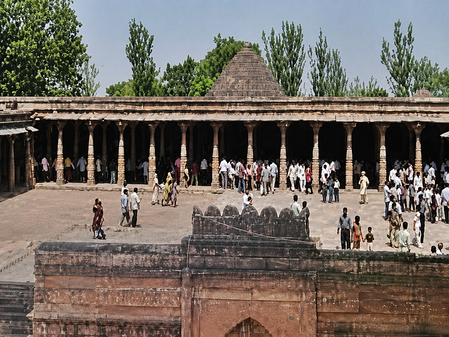
The Indore Bench of the Madhya Pradesh High Court has declared the Bhojshala complex in Dhar as a temple, affirming the Hindu community’s right to worship there. The court emphasized the historical continuity of Hindu worship at the site and criticized previous administrative decisions. Scientific archaeological evidence played a crucial role in the court’s judgment, highlighting the site’s religious significance and uninterrupted association with Hindu practices.
The court’s ruling overturned past compromises and stated that Hindu worship at Bhojshala has persisted over time, maintaining the site’s religious identity. It deemed the 2003 Archaeological Survey of India order allowing Friday prayers as inconsistent with the true nature of the monument. The judgment heavily relied on a 2024 archaeological survey, emphasizing Sanskrit inscriptions and sacred elements as evidence of the site’s original purpose.
In a directive to the Union Government, the court emphasized the duty to preserve the nation’s ancient culture and scriptures. It urged efforts to retrieve the original idol of Goddess Vagdevi from the British Museum to uphold the constitutional right to religion. While affirming Hindu worship rights at Bhojshala, the court suggested allocating alternative land for a mosque to address Muslim community concerns.
The court concluded that the Hindu side retains the right to worship at Bhojshala, recognizing it as King Bhoj’s property. The Archaeological Survey of India will continue to manage the complex for its protection and preservation as an ancient temple and educational center.
