


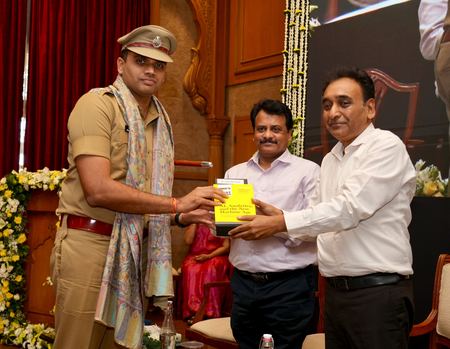
Maharashtra Chief Secretary Rajesh Agarwal highlighted the importance of providing services to citizens in a more accessible, faster, and transparent manner. He mentioned the need to enhance digital coordination among government departments, drawing inspiration from efficient systems like passport services. Efforts are underway to develop a system that automates the flow of information between departments upon result declarations.
The Chief Secretary stressed the improvement of government-to-government (G2G), government-to-citizen (G2C), and government-to-business (G2B) services. He proposed transitioning from traditional agent-based systems to digital and AI-based mechanisms. Agarwal introduced the concept of creating citizen profiles through DigiLocker and “Golden Data” to facilitate automatic access to government schemes and services.
Agarwal envisioned a future where citizens would not require multiple applications, as AI-based agents would cater to their needs through voice recognition. The state government is collaborating with various companies to implement this system gradually in the upcoming months. Chief Commissioner Manu Kumar Srivastava of the Maharashtra State Right to Service Commission emphasized the importance of encouraging and institutionalizing innovative governance initiatives.
Srivastava highlighted the necessity of documenting successful initiatives for effective replication in other districts. He urged officers to submit detailed reports of their initiatives for broader implementation. Notably, districts like Chhatrapati Sambhajinagar, Hingoli, Ahilyanagar, and Beed were recognized for their outstanding performance in delivering services within stipulated timeframes.
