


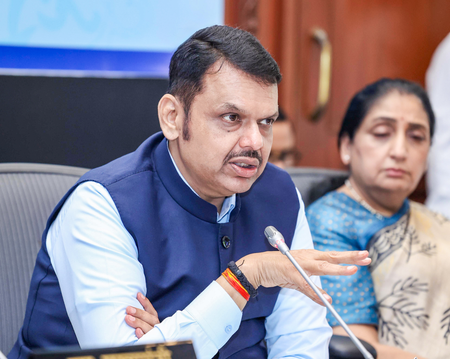
Chief Minister Devendra Fadnavis instructed the Maharashtra State Road Transport Corporation (MSRTC) to establish a network of charging stations for e-buses across the state. He emphasized the goal of converting 100 state transport (ST) buses into e-buses under the ‘Viksit Maharashtra’ initiative. The CM outlined a plan to transition 50% of the ST bus fleet to e-buses by 2029, 80% by 2035, and achieve full conversion by 2047.
CM Fadnavis highlighted the importance of analyzing designated routes for eco-friendly e-buses using Artificial Intelligence (AI) technology. He stressed the need for prompt inspection of buses upon delivery and the development of a comprehensive ecosystem for e-buses. Additionally, he called for studying private bus routes to prepare e-bus alternatives on those lines.
The state government’s Electric Vehicle (EV) policy promotes the use of e-buses in public transport, offering a 10% subsidy on bus costs, up to Rs 20 lakh, for 1,500 e-buses. The MSRTC is implementing a project for 5,150 e-buses under the Gross Cost Contract (GCC) model. CM Fadnavis believes this initiative will provide modern, comfortable, and eco-friendly travel options for passengers in Maharashtra.
CM Fadnavis’s directive to utilize AI aims to optimize route planning for e-buses. The AI algorithms will consider grid availability, traffic patterns, terrain slopes, and passenger loads to determine efficient charging stops without disrupting schedules. The GCC model, where private operators own and maintain buses, while MSRTC pays a fixed rate per kilometer, is being utilized to expedite the e-bus deployment.
