


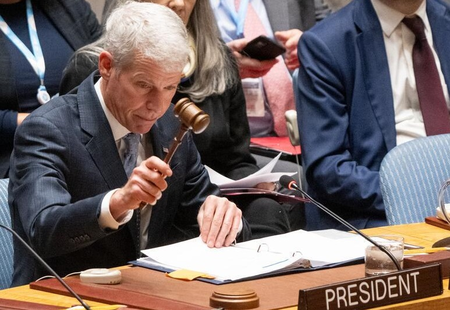
The US Energy Secretary, Chris Wright, emphasized the critical need for significantly increasing energy production to uplift hundreds of millions of people living in poverty worldwide. Speaking at a briefing on “Energy, Critical Minerals, and Security,” Wright highlighted the challenges faced by the impoverished in the Global South while criticizing what he termed as “aggressive climate policies.” He advocated for the promotion of “energy abundance” as a cornerstone of the Trump administration’s approach.
Wright underscored the disparity in living standards, noting that only one billion individuals globally enjoy a life of abundance akin to those in the Security Council chamber. He stressed that around seven billion people aspire to such living conditions and asserted that the pathway to achieving this goal is through a substantial surge in energy availability.
Pointing out the dire circumstances faced by a significant portion of the global population, Wright pointed to the staggering statistic of two billion individuals, a quarter of the world’s population, lacking access to clean cooking fuels. He highlighted the severe health implications of indoor air pollution resulting from the use of wood, charcoal, and dung for cooking and heating, which leads to the premature deaths of over two million people, as estimated by the United Nations health agency.
In his address, Wright criticized what he described as “unrealistic and poorly planned” aggressive climate policies, cautioning that such approaches pose tangible threats to nations and populations worldwide. He called attention to the adverse impacts of restricting energy production based on fossil fuels, noting that such actions often lead to increased reliance on external, potentially unfriendly sources. Wright also referenced past energy crises, such as the situation in Europe following disruptions in Russian oil and gas supplies due to geopolitical tensions.
Highlighting the interconnected nature of energy and national security, Wright emphasized the importance of diversifying critical mineral supply chains to safeguard economic and security interests. He stressed the necessity for the United States and its allies to avoid excessive dependence on any single country for essential materials vital to their economies and security.
