


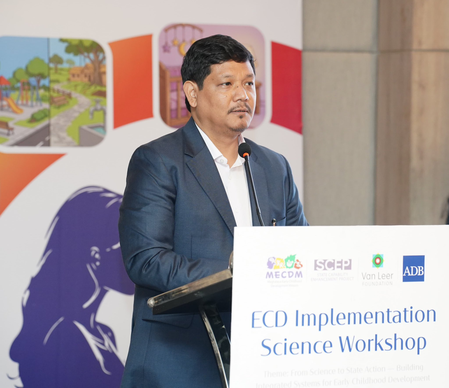
Meghalaya Chief Minister Conrad K. Sangma highlighted the importance of robust implementation systems and integrated governance for enhancing early childhood development, maternal health, and social welfare outcomes. Speaking at an event in Shillong, Sangma stressed the significance of effective implementation and collective political will in addressing developmental challenges. He emphasized the need for practical, locally relevant solutions over generic approaches to achieve tangible results.
Sangma underlined the role of governance reforms in improving the utilization of government schemes and projects in Meghalaya. He cited examples of enhanced execution leading to significant increases in project utilization and absorption capacity. The Chief Minister also emphasized the value of identifying specific barriers and tailoring solutions accordingly, rather than adopting a one-size-fits-all strategy.
Referring to efforts to reduce maternal mortality, Sangma discussed the shift towards addressing economic and logistical barriers in addition to promoting institutional deliveries. He highlighted the importance of understanding local realities and designing affordable solutions to effectively tackle challenges. Sangma also mentioned the state’s integrated governance approach and the MOTHER program aimed at holistic support for maternal and child welfare.
Sangma further emphasized the link between economic empowerment and health outcomes, citing the expansion of Self-Help Groups in Meghalaya as a driver of social and developmental progress. He advocated for cooperative federalism and knowledge exchange among states to foster innovation and good governance. The Chief Minister’s remarks were made during a workshop focusing on early childhood development and governance issues.
