


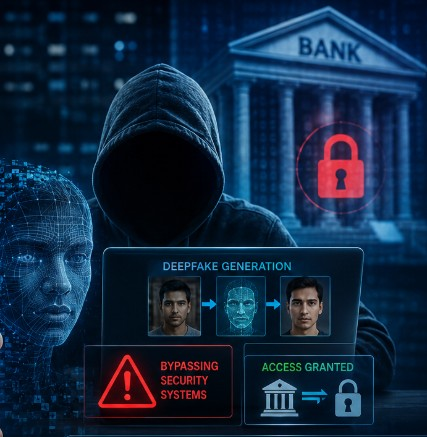
The Ministry of Home Affairs has issued a warning regarding the increasing misuse of Artificial Intelligence (AI) by cybercriminals to produce convincing deepfake videos and synthetic identities. Cyber fraudsters are utilizing advanced AI tools to create realistic digital impersonations that can deceive authentication systems. These technologies could be exploited to bypass various security measures like facial authentication, liveness verification, and access to financial services.
The National Cybercrime Threat Analytics Unit (NCTAU) highlighted a multi-stage modus operandi used by fraudsters in such cybercrimes. The process typically starts with initial contact through social media, messaging platforms, job portals, dating apps, or phone calls. Subsequently, attackers gather facial data, either from publicly available sources or by coaxing victims into specific facial actions like looking at a screen or speaking on camera.
Using AI-powered deepfake technologies, cybercriminals process the collected recordings to create highly realistic digital replicas that imitate a person’s facial expressions, gestures, and voice. The advisory cautioned that without adequate deepfake detection capabilities, these fabricated identities could be used to circumvent security checks. Authorities warned that the misuse of AI-generated content might aid in fraudulent Know Your Customer (KYC) verification processes.
To combat these evolving threats, the NCTAU recommended security measures for institutions and individuals. It suggested that customer onboarding systems, especially those in fintech firms, should integrate robust mechanisms to detect deepfakes and synthetic content. Additionally, individuals were advised to monitor email notifications for any suspicious activities indicating potential identity misuse and report any signs of financial fraud or identity theft promptly.
